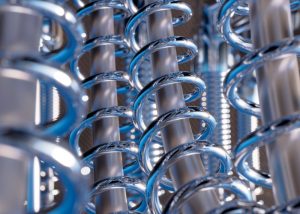

Modern industries depend on high-performance materials that are consistent, pure and precisely engineered. The Metal Granulation process serves as the essential method that enables scientists to achieve precise control over their work because it transforms raw metals into uniform particles, which can be used for advanced scientific research & industrial operations.
By improving material consistency & structural uniformity, Metal Granulation supports everything from large-scale manufacturing to nanotechnology research.
Understanding the Role of Metal Granulation
Metal granulation is a technique for the processing of materials that reduces molten metal and raw metals into granules of uniform size and particles of controlled size.
This process helps standardize material structure, making metals easier to handle, process and refine in downstream applications.
Key functions include:
- Converting irregular metal forms into consistent particle sizes
- Improving material handling and transportability
- Preparing metals for high-precision industrial use
- Supporting further changes in chemical and metallurgical processes
This process improves efficiency, consistency & usability of metals across industrial & research applications, making it a key step in modern material processing.
Why Material Uniformity Matters in Industry
In modern manufacturing, even minor inconsistencies in raw materials can affect performance, especially in precision-driven sectors like electronics, coatings and advanced alloys.
Metal Granulation ensures:
- Consistent particle distribution
- Predictable physical and chemical behavior
- Reduced contamination risk
- Stable performance across production batches
Uniformity is essential for maintaining repeatable and scalable manufacturing outcomes.
Key Benefits of Metal Granulation
Metal Granulation offers several advantages that directly improve industrial efficiency and product quality, especially in Chromium Metal applications.
- Improved material purity: Helps maintain controlled composition and reduces unwanted impurities.
- Better handling and processing: Granulated metals are easier to store, transport and feed into machines.
- Reduced production waste: Minimizes material loss during processing and melting stages.
- Enhanced reaction stability: Ensures predictable behavior in chemical and metallurgical applications.
- High scalability: Suitable for both laboratory research and large-scale industrial production.
Applications in Advanced Industries
Metal Granulation is widely used across industries that require high-performance materials with strict quality control.
Common applications include:
- Electronic component manufacturing
- Chemical synthesis and processing
- Alloy and metallurgy production
- Optical and coating technologies
- Catalysis and material research
For example, Copper Metal is often granulated to improve conductivity performance and ensure consistent behaviour in electrical systems.

Role in Nanotechnology and Scientific Research
In research environments, precision is critical. Even slight variations in material structure can affect experimental outcomes.
Metal Granulation supports research by:
- Providing controlled feedstock for nanoparticle synthesis
- Improving reproducibility in experiments
- Reducing irregular particle formation
- Enhancing material stability for testing
Silver nanopowder is widely used in research due to their conductivity & antimicrobial properties, which depend heavily on controlled processing techniques.
Importance in Nanomaterial Production
Nanotechnology requires extremely fine control over particle size and distribution. Metal granulation acts as a crucial pre-processing step before nanoscale refinement.
Key advantages:
- More stable input material for nano synthesis
- Better control over particle breakdown
- Reduced structural inconsistencies
- Improved scalability of nanomaterial production
Materials like nano powder metal and Chromium Metal benefit significantly from this controlled preparation, especially in high-performance coatings and corrosion-resistant applications.
Industrial Manufacturing Efficiency
In large-scale production systems, efficiency and consistency are essential for cost control and product reliability.
Metal Granulation improves industrial performance by:
- Increasing furnace and melting efficiency
- Reducing downtime in processing systems
- Enhancing alloy blending accuracy
- Improving throughput in automated systems
- Lowering defect rates in finished products
This is especially important in high-demand materials such as copper metal, widely used in electrical and mechanical systems.

Quality Control and Process Reliability
High-performance industries need to follow safety requirements, quality standards, and regulatory requirements because material consistency functions as a critical element that drives their operations. Metal Granulation supports quality assurance by ensuring uniform particle distribution and reducing batch-to-batch variation.
This system enables manufacturers to satisfy international material requirements while enhancing their operational reliability. The system improves safety during handling and processing operations that involve reactive and high-purity metal utilized in research and industrial settings.
Conclusion
As industries evolve, precision in material processing becomes increasingly important. Metal Granulation ensures metals are refined into uniform, reliable forms that support modern industrial & research needs.
This process plays a key role in advancing material performance and consistency from improving Nano Powder Metal applications to enhancing the usability of Silver Nanopowder, Copper Metal and Chromium Metal.
Organizations like Viridis Materials LLC continue to support innovation by supplying high-quality materials for global scientific & industrial use.
FAQs
It is a process that converts raw or molten metals into uniform particles.
It improves handling, consistency and processing efficiency of metals.
It is used in metallurgy, electronics, nanotechnology and research industries.
Yes. It ensures more consistent and reliable material performance.
Yes. It helps prepare metals for nanoscale processing by improving uniformity.