Modern technology now relies heavily on high-precision coating. Thin film coatings are used everywhere to enhance performance, durability, and efficiency across applications from semiconductors and optics to aerospace and research labs. Evaporation materials, which are important for producing exact and superior thin films, are at the heart of this process.
Selecting the right materials is not always simple. It requires understanding purity levels, application needs, and compatibility with deposition systems. In this blog, we will explore how to choose the right evaporation materials for high precision coating applications and why it matters for industries that depend on accuracy and consistency.
What Are Evaporation Materials?
Vacuum deposition procedures involve specially prepared materials called evaporation materials. This process creates a thin film by heating materials until they evaporate and then condensing them onto a surface.
Depending on the use, these materials may consist of metals, compounds, alloys, and ceramics. The stability and purity of the evaporation materials working in the process have a significant impact on the final coating’s quality.
Even a tiny impurity can have an impact on performance in sectors like electronics and optics. Because of this, choosing the appropriate evaporation materials is an essential part of the manufacturing process.
Importance of Choosing the Right Materials
When working with thin film coatings, precision is everything.
The right evaporation materials ensure:
- Consistent film thickness
- High adhesion strength
- Better electrical and optical performance
- Reduced contamination risks
Using improper or subpar evaporation Product failure, increased production costs and low productivity can all be caused by materials. As a result, businesses depend on reliable suppliers who give highly pure and tested products. In many cases, industries prefer working with a high purity metal compound supplier to ensure consistent quality and meet strict performance standards in advanced applications.
rformance.
Key Factors to Consider Before Selection
Before choosing Evaporation Materials, several important factors should be evaluated:- Purity Level : High-purity materials are essential for precision coating. Even trace impurities can alter the film’s structure and performance. Industries such as semiconductors and optics require ultra-clean Evaporation Materials.
- Material Compatibility : Different substrates react differently to coating materials. The selected evaporation materials must match the thermal and chemical properties of the base surface.
- Deposition Method :Various deposition techniques may require different forms of Evaporation Materials, such as pellets, wires, or powders.
- Application Requirements : Whether the coating is for electrical conductivity, reflectivity, or protection, the right evaporation materials must meet those functional needs.

Role in Semiconductor Manufacturing
Handling advanced compounds requires careful storage, transportation, and packaging procedures. Industrial buyers work with materiThe semiconductor industry depends heavily on precision and reliability. Thin films are used in microchips, sensors, and integrated circuits. Even microscopic defects can affect performance.
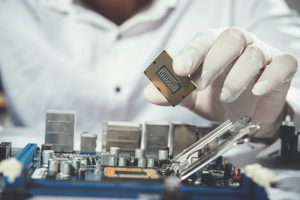
This is why evaporation materials are widely used in chip production. They help create ultra-thin layers with controlled thickness and uniformity. For manufacturers dealing with raw materials needed for semiconductor industry, high-quality evaporation sources are essential to maintain efficiency and accuracy in production lines.
Without reliable Evaporation Materials, semiconductor devices would face performance instability and reduced lifespan.

Importance in Thin Film Technology
Solar panels, optical coatings, and display screens are just a few of the many businesses that use thin-film technology. How precisely and uniformly the thin film is deposited determines how well these goods work. Manufacturers can regulate film thickness at the atomic level with evaporation materials. This accuracy guarantees increased longevity in protective coatings, better conductivity in electrical equipment, and superior reflection control in lenses. evaporation materials continue to be one of the most crucial parts of contemporary coating systems because of these benefits.
Comparison with Other Deposition Materials
There are various deposition methods in addition to evaporation processes. In sputtering systems, for example, atoms are released from a solid target and deposited onto a substrate using sputtering targets.
Although the two techniques have comparable functions, evaporation provides more control in some situations, particularly when extremely thin and pure coatings are needed. The final product requirements determine which deposition options, such as evaporation materials, to use.
Industrial Applications of Evaporation Materials
The use of evaporation materials is not limited to one industry. It spans several high-tech fields:-
- Electronics: Used in microchips, circuit boards, and sensors for accurate electrical performance.
- Optics: Used in lenses, mirrors, and coatings to improve light reflection and transmission
- Aerospace: Protects components from heat corrosion and environmental stress
- Research and Development: Laboratories use evaporation materials to test new coating techniques and material behaviors.

Challenges in Material Selection
Choosing the right evaporation materials comes with certain challenges:
- Maintaining consistent purity levels
- Ensuring material stability during heating
- Complementing substrate requirements with material qualities
- Controlling expenses without sacrificing quality
Future Trends in Evaporation Technology
As technology continues to evolve, evaporation materials are also improving.
New developments focus on:
- Higher purity production methods
- Eco-friendly manufacturing processes
- Advanced alloy compositions
- Better thermal stability
These innovations are helping industries achieve more precise coatings and better product performance. It is expected that the semiconductor, optical, and nanotechnology industries will need more dependable evaporation materials.
Conclusion
The performance and quality of a product are directly impacted by the choice of materials used in coating applications. In order to create the highly precise thin films required in contemporary technology, evaporation materials are crucial.
Purity, consistency, and dependability are essential for everything from semiconductors to optics. In production systems, a careful selection procedure guarantees increased productivity and long-term stability.
Industries may rely on Viridis Materials, a reputable brand in providing precision-grade materials for scientific and industrial applications, for superior materials and modern studies support.